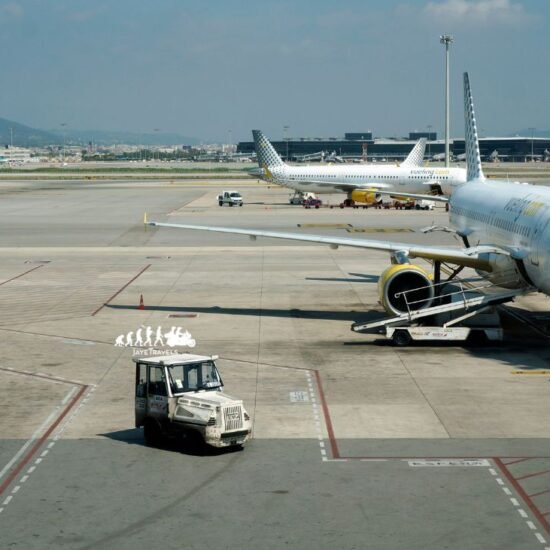









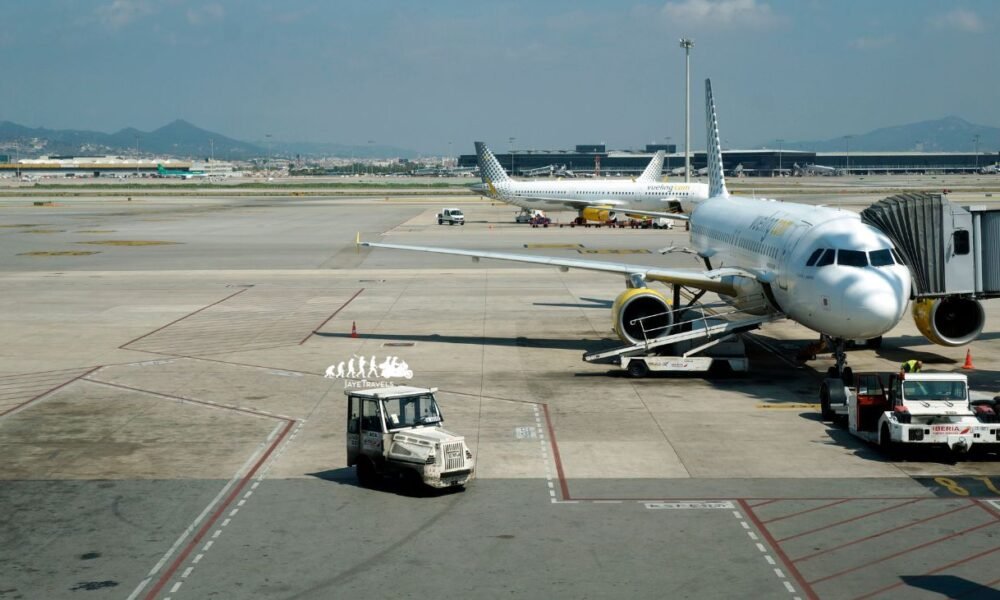
When your boarding door closes before departure, the aircraft is not just sitting there doing nothing. Ground crews and pilots are actively locking in final weight, balance, and fuel calculations required for a safe takeoff. Adding even one late passenger alters these strict safety metrics, which is exactly why planes close doors early and gate agents cannot let you board even if the plane is still parked right outside the window.
Table Of Content
- The Sprint of Shame
- The Invisible Math Test
- Why One Person Ruins Everything
- The Baggage Balancing Act
- What The Pilots Are Actually Doing
- A Costly Lesson Learned
- Quick Tips To Never Miss Your Flight
- Frequently Asked Questions About Gate Closures
- What time do airport gates actually close?
- Why can I not board if the plane is still at the gate?
- What is a load sheet in aviation?
- Can gate agents make exceptions for late passengers?
- Why does removing my bag take so much time?
The Sprint of Shame
Picture this. I am running through the airport terminal like an action movie star who just realized he forgot to turn off the stove. Sweat is dripping down my forehead. My backpack is bouncing wildly against my shoulders. I have exactly three minutes before my scheduled departure time. I dodge a family eating snacks. I swerve around a slow moving luggage cart. I finally see my gate at the end of the hall.
The plane is right there. The jet bridge is still attached to the side of the aircraft. I hand my crumpled boarding pass to the gate agent while gasping for air. I give her my best winning smile. She looks at me with a mix of pity and absolute authority. She shakes her head and says the flight is closed.
I stare out the big glass window at the massive metal bird. It is not moving an inch. It is just sitting there staring right back at me. I feel furious. I feel confused. I am asking myself why you cant board even if plane is there. I begged. I pleaded. I even tried the classic puppy dog eyes. But the answer remained a very firm no. I felt like a total potato standing there while the plane continued to sit perfectly still for another twenty minutes.
The Invisible Math Test
For a long time, I thought the airline was just being mean. I assumed they wanted to punish latecomers to teach us a lesson. But as I sat there at the gate waiting for my rebooked flight, a friendly airline worker sat next to me on her break. She saw my sad face and decided to explain the actual airplane gate closure rules. Her explanation completely changed how I look at air travel.
Gate closure is not the signal for the plane to back up and leave. It is actually the starting gun for a whole new set of heavy duty tasks. While I was pressing my face against the glass crying over my missed flight plane still at gate, the ramp workers and load controllers were racing against the clock. They have a massive checklist to finish before those wheels can safely leave the tarmac.
The biggest piece of this puzzle is a document called the load sheet. Think of the load sheet as the final exam the airplane has to pass before it is allowed to fly. This document is prepared by a load controller. It covers the total weight of the aircraft, exactly how the passengers and bags are spread out, the weight of the cargo, the fuel on board, and the center of gravity.

Why One Person Ruins Everything
Airlines do not just guess how heavy a plane is. They calculate it down to the exact kilogram. The captain takes the final numbers from the load sheet and types them into the flight management computer. Those specific numbers tell the plane exactly how fast it needs to go to lift off the ground safely. They determine the flap settings and how much engine thrust is required.
This is where my late arrival becomes a huge problem. Imagine the load controller just finished all that complicated math. The weight is perfectly balanced. The pilots have locked in their takeoff speeds. Then I come running down the jet bridge with my heavy carry on bag and plop myself into a seat at the very back of the plane.
I just ruined the math. The load sheet is now wrong. The pilots are suddenly working with numbers that do not match reality. That mismatch means the aircraft might not get the correct engine power for takeoff. It might have the wrong speed calculations. In the world of aviation, bad math at takeoff is incredibly dangerous. This is the real reason airlines treat the boarding cutoff time as a solid brick wall rather than a friendly suggestion.
The Baggage Balancing Act
Sometimes people miss their flight but their checked bags are already on the plane. The friendly worker explained that taking a bag off the plane is an absolute nightmare. People assume someone just opens the cargo door, grabs the suitcase, and tosses it out. That is entirely wrong.
Baggage is loaded in a very specific order to keep the plane balanced. If workers pull bags out carelessly, the weight shifts. If the weight shifts too far toward the back, the front of the plane can literally tip up into the air while still parked at the gate. It sounds like a cartoon, but it happens.
Once a bag is removed, the load controller has to completely redo all the math. They have to print and submit a brand new load sheet. The pilots have to enter the new numbers all over again. It creates a massive delay for every single person on board.
What The Pilots Are Actually Doing
While I was having a meltdown at the gate desk, the flight crew was incredibly busy. They were not just sitting in the cockpit sipping hot coffee and chatting about their weekends.
The pilots are reviewing the absolute latest weather updates. They are checking for route changes. They are talking to air traffic control to secure their exact departure slot. They have to brief each other on the takeoff procedure, including exactly what they will do if an engine suddenly fails on the runway. All of this highly coordinated work relies on the final numbers from that load sheet. It is a massive team effort designed to keep everyone alive.
A Costly Lesson Learned
Sitting in that terminal watching my original flight finally push back from the gate was a tough pill to swallow. I had to pay a hefty fee for a new ticket. But I gained a massive amount of respect for the process. Boarding an aircraft is nothing like hopping onto a moving jeepney or squeezing into a crowded bus. Every single item on that plane is accounted for in a formal safety document.
The worst part was not the wait. It was figuring out what to do next while my brain was still in full panic mode. If you ever find yourself in the same spot, I put together a step-by-step guide on what to do when you miss a flight, from talking to the right counter to knowing your rebooking options. And since that surprise ticket blew a hole in my budget, I went straight back to my own proven tips to score cheap flight tickets to make up for it on my next trip.
My replacement flight was not until the next morning, so I also had to figure out where to sleep. For one night of waiting, I did not need a full apartment with a kitchen and a balcony. If you are ever torn between the two, here is my breakdown of Airbnb vs hotel and which is better for your next trip. For a quick overnight stop like this, a hotel close to the terminal usually wins.
Here at Jaye Travels, we always preach about going with the flow, but airport timing is the one place where you absolutely must follow the rules. Now I know that a closed gate is just the middle of a complex safety procedure. The airplane is not ignoring you. It is just doing its math homework so it does not fall out of the sky.
Most importantly, do not let one missed flight scare you away from the airport for good. Mistakes like mine are part of the learning curve, and every trip turns you into a smarter traveler. I still believe in the surprising benefits of traveling, and I keep reminding myself of the reasons why you should travel at least once a year. And if the travel bug bites as hard for you as it does for me, here are my reasons why you must travel once a month. Just make sure you reach the gate on time.
Quick Tips To Never Miss Your Flight
You need to arrive at the airport at least two to three hours before international flights and a solid two hours for domestic ones. You should always check your specific airline boarding cutoff time because it changes depending on the carrier and the airport. Make sure you head to your gate the absolute second boarding is announced instead of waiting until the final call. Keep your passport and boarding pass easily accessible in your hand to avoid slowing down the line. Finally, if you are traveling during peak holiday seasons, add an extra hour just to survive the security checkpoints.
One more tip that has saved me since that day: if your flight leaves at the crack of dawn, sleep near the airport the night before. Waking up just minutes away from the terminal takes traffic and long commutes completely out of the equation. If you need a place to start, check out my post on Aerostop Hotel, a hotel near the airport that makes early morning flights far less stressful.
Frequently Asked Questions About Gate Closures
What time do airport gates actually close?
Gate closing time is usually fifteen to thirty minutes before the scheduled departure time. This varies by airline and airport size. You must remember that gate closing time is completely different from your actual flight departure time.
Why can I not board if the plane is still at the gate?
Even after the doors shut, the crew must finalize the load sheet, complete critical safety checks, and confirm mathematical numbers with the pilots. This process takes time and cannot be interrupted by late passengers.
What is a load sheet in aviation?
A load sheet is a formal safety document prepared by the load controller. It details total aircraft weight, passenger distribution, cargo weight, fuel levels, and the center of gravity. Pilots rely on this exact data to set takeoff speed and engine thrust.
Can gate agents make exceptions for late passengers?
Gate agents generally cannot make exceptions. Boarding cutoffs are strictly enforced for safety and operational reasons. The agents do not have the power to override these safety protocols just because you are running late.
Why does removing my bag take so much time?
Bags are loaded in a specific sequence to maintain the balance of the aircraft. Taking one bag out requires workers to safely shift other cargo. The load controller then has to redo the entire weight calculation before the plane is allowed to leave.